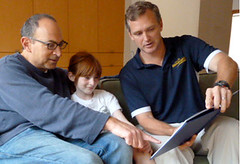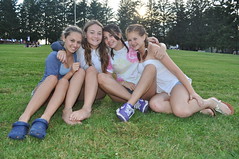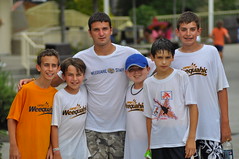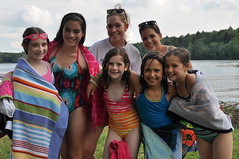

You may have heard the Weequahic directors and year round staff were college athletes. It’s true. Well, Cole played golf at Virginia, so he was almost an athlete! Between the four of us, we’ve coached baseball, soccer, and golf at the NCAA Division 1 level for more than 20 years.
So, Weequahic must be a pretty competitive place, right?
Wrong.
Our focus is activity and skill development, rather than outcome. Competition is a wonderful tool for developing teamwork, community, and communication. It also helps determine areas for improvement. In essence, when done correctly, a little competition can really help a camper.
 Weequahic is a part of the Wayne County Camp Association. Among its other duties, the WCCA organizes tournaments throughout the summer for our 31 associated camps in almost all of our activities. From swim and track meets to flag football, basketball, baseball, hockey, and lax games, we have just about anything a camper could want. We will even take campers to local USTA tennis tournaments so they can compete with kids from all over our region. While we have fun with a little competition, we are BIGGER believers in fun, skill development, and play.
If a camper wants to play on one of our teams, he or she simply needs to raise a hand and say ‘I want to be on the team.’ Once campers commit, they are good to go, regardless of their skill level. And, as long as they are supportive of their teammates and putting forth their best effort, they’ll play!
With one exception, we do not have tryouts at Weequahic. We require tryouts for tennis only because league rules restrict tennis rosters to eight players. If more than eight campers want to play, we hold a ladder tournament to determine the roster.
That said, sports competition is not for everyone. That is why we have incredible aquatics, adventure, and arts programs including things like Magic, Skate Park, Robotics, Radio, Music and more.
Not all of our camp competition, however, is relegated to WCCA events. What summer would be complete without a Color War type of competition?
 Campers in our first session enjoy Tribals, a four team multi-day spirit competition. Vying for the “Deed of the Land”, campers play, sing, cheer, and laugh as they compete in spirit competitions in which everyone adds value to their Tribe. Campers in the second session enjoy Olympics, a five day competition between Army and Navy teams that dates back to our founding in 1953.
So, whether you are an athlete who wants to improve or an artist that is thrilled to explore the creative side of camp, Weequahic has something fun to offer. See you at camp!
Cole