Recently some camp counselors shared what they’ve learned on the job and I’d like to highlight two important concepts they talked about. Think of this as your basic introduction to camp counselor skills and also how important professional development is to your overall future:
1. Time management
High school students often focus on preparing for college by earning acceptable grades and participating in additional activities. While these strategies are essential to the process, students too often rely on parents/care givers for structure and reminders and fail to understand that managing time is one of the most important skill required for college success. Across the United States, students with ability and good intentions often struggle in college, just because they have not learned to schedule assignments, work, reading and most importantly the time they spend having fun or relaxing.

In contrast, one past camp counselor explains, “time management is crucial at camp,” and even if you are familiar with regimented schedules, “a camp counselor is responsible for keeping others in line with the daily schedule.” So the job requires not only learning to manage time personally, but also for large groups and that becomes a skill counselors develop. Camp counselors also “learn to be disciplinarians in strategic ways.” These skills are essential and applicable to keeping an undergraduate student motivated to complete assignments and participate in college activities. So, since professional experience at camp requires “all counselors to be responsible,” and to “learn to be accountable for personal actions as well as those of others,” camp counselors benefit in multiple ways.
Working as a camp counselor is also the perfect component to rounding out a year of personal and professional growth by managing the time between semesters! As students mature and move into the realm of adulthood, they often have to face the reality that they are not completely self sufficient.
2. Independence and freedom
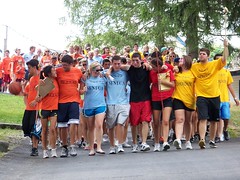 Once a young adult goes to college, no matter how much they miss home or home cooking, they are changed forever! One past camp counselor puts it this way, “After my first undergraduate winter break back home I decided I didn’t want to return home for three months during summer. College gave me independence/freedom from parental supervision, and I wanted to continue the experience through summer employment.”
So, as you can see, being a camp counselor is a great fit for young adults who expect to do more than the minimum. Since campers often want to prolong their time at summer camp, they can also take it to the next level as counselors. After repeat summers a few even go on to fill additional camp staff positions before making their mark in other careers!
What’s your plan for personal growth next summer? Do you see “camp counselor” in your future?
Deborah-Eve

Thanks for the image Michel Filion.

 According to American Camp Association