Tag: summer camp

Growing Up Global

As parents, we often hear predictions about the necessity for our children to prepare for a new and “global” world. While some people explain that the roots for global interactions were planted centuries ago, current electronic and transportation technologies make people across the globe even more connected and interdependent. So how can we prepare our children and give them experiences to help them become globally literate?

Of course, travel is an obvious way to help children increase their cultural currency, but going to camp also helps foster global thinking and skills in specific ways. Summer camp is a place where children from around the world and different parts of the United States connect with each other, build lifelong friendships, try new things and practice living together. At Camp Weequahic for example, campers have recently travelled from France, Spain, Switzerland and Venezuela to join in the fun. On average, about 5% of campers come from outside the United States but wherever your child departs from, they can benefit from the diverse mix of kids at camp. They can practice a language and will definitely learn about different customs with daily interaction and time to soak it all in. Most importantly, they will learn how to respectfully engage with people with different views, who may not approach everything the same way.
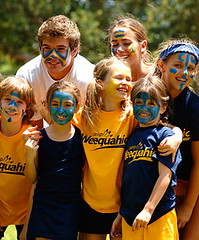
In her book, Growing Up Global:Raising Children to Be At Home in the World, Homa Sabet Tavangar says that the first step towards developing a global outlook requires “embracing the mind-set to make a friend and be a good friend.” Making friends means practicing universal qualities like empathy and respect, and building lasting friendships at camp is a huge part of the total experience. Counselors and staff are trained and at the ready to help campers grow in this area, build new skills when necessary and model caring for others. Tavangar explains that versions of the Golden Rule, or “treat others as you wish to be treated,” permeate all cultures and faith traditions and elaborates on these in her book. When children embrace the universal values of caring for each other, they employ humility, curiosity and compassion which then leads to making true friends—and that’s what makes a world citizen.

So, wherever we go in the world, it’s the experience of breaking down the elements of diverse cultures and seeing what makes them similar or distinct, that prepares us for relating to each other. For kids, a baby step towards negotiating new cultures can be overcoming the fear of new foods or being away from home at camp where things are “different”—after all, every camp, and each year, has it’s own special character or culture. For example, many campers bond over the issue of learning to like new foods and it’s that kind of experience that prepares children for the future.

Growing up global is not just about preparing to do business in the world economy. It’s about having the comfort and desire to connect with the Kenyan dad who coaches a local soccer team, a Turkish neighbor with distinct fashion style or an American who expects consistent electrical power! Ultimately it’s about being curious about differences instead of afraid of them and valuing making friends with the diverse people we meet. Psychologists link friendship to an individual’s health and ultimately to the ability to survive—so friendships are key to feeling at home in our individual skins as well as feeling at home on our planet.

Our experiences at summer camp are a key component in raising globally aware and confident children. The friendships and lessons learned at camp will last long after camping season ends as campers continue to expand their horizons, stay connected with friends across time and geography and find their life’s passions. How do you plan to raise global kids and make camp a part of their preparation? Have you read Growing Up Global or used any of Tavangar’s suggestions? We’d love to hear how camp contributed to defining your world view!

Deborah-Eve

Thanks for the images Horia Varlan and woodleywonderworks.
Top Seven Questions to Ask a Camp Director

We take our 10 month ‘off season’ to plan for 2 months of fun (and safety) and excitement (and growth)! For me, this means meeting every family interested in Weequahic for next summer. (Well, almost every family. I have yet to make it to Spain…).

Home visits are my favorite part of the ‘off season.’ I get to see the children in their home environment – how they interact with their parents, what games do they like to play, how engaged they are in the process of choosing a camp, etc.

These visits also help me better understand their families as well. We are big believers in the importance of a whole family approach to Weequahic and do our best to provide both the camper and their family an exceptional summer experience.

Home visits represent an invaluable experience for me, especially when putting the bunks together or speaking with parents during the summer. Therefore, I enter every home with a list of questions I want to explore. I suggest parents approach these meeting in the same manner.

Now, every family is different. Some have no camp experience to draw upon. Sometimes, both parents went to camp for many years. (More often than not at Weequahic, one parent enjoyed camp at least once.) Regardless of your level of camp experience, here are a few questions I think you should ask of any camp director:

  1. Who are your counselors? How do you find and train them? How old are they and how many live with the kids in the bunk?
  2. Who supervises the counselors? What is their background?
  3. What is the program day like? Do our children choose any, some, or all of the daily activities? Will my child participate in activities with boys and girls of any age or is it more structured?
  4. What sets your camp apart from others?
  5. Where do your campers come from? How do you place new campers into your community?
  6. When is visiting day and how does that work?
  7. How will my child get to camp? What about their luggage? Please explain the first day at camp to me so we know what to expect.

While this is not an exhaustive list of questions, I believe these are some of the most important. The director, or whoever visits your home, will not be the one providing direct care for your child. However, the director must, in my opinion, have a major influence on the staff selection and training, the bunk life for each child, and much more. The answers to these questions will provide a more thorough understanding of the philosophies behind the camp.

The families who approach home visits with a list of questions and specific information they want to receive will have a much better chance in making the right choice for their child. If we can help, don’t hesitate to call! (And, if you can think of some other questions you’d like answered, please post them here!)

Cole Kelly, Camp Director

Building Community At and Beyond Camp

I don’t know about you, but a good number of my current communities are one step away from reality — they only exist online. I have a Facebook community, which includes a good number of friends-of-friends that I’ve never met in person. I visit a set list of blogs every day and have a great time interacting with the authors and the other readers. While our definition of community might be expanding, I don’t think any of us have lost sight of the importance of a good, old-fashioned in-person community though.

According to the American Camp Association, parents have identified the development of social skills/living in community (such as making new friends, getting along with others, becoming more responsible, and learning group-living skills) as one of the main reasons they send their children to camp. The owners, directors and staff at summer camp all understand the power of community and structure these skills into their programs in several areas.

1. Communal Living

I am an only child, and as such, I always had my own room when I was a child, so living in a camp bunk for the first time was a huge learning experience. For the first time, I had to be part of a community of people who were sharing space, delegating work and working, communally, to make things work. It didn’t take long for me to get into the routine of doing my part and see how even the most menial job — mine was taking out the trash – contributed to the health of the community.

Bunkmates must also learn how to navigate the waters of communal decisionmaking. They must work through the inevitable issues and conflicts that come up in bunk living — and they must learn to adapt and get along when things don’t go their way. They learn to live by the will of the majority, while at the same time respecting the needs of others who represent the minority. Again, according to the ACA, “small group living also provides the necessary intimacy for individuals to achieve a sense of belonging, explore a variety of group roles, cooperate and form relationships with others, and have input into the group’s activities”.

2. Eating and Singing Together

In the past few years there has been a large ad campaign promoting family dinners. Sitting around the dinner table sharing stories, concerns and the high and low points of your day with family members — or fellow campers — creates intimate bonds between all of the participants. Most camps have family-style meals and singing traditional camp songs together is often a ritual. Songs are always a founding piece of any culture and at camp, at the end of session when everyone knows the camp songs, they too become community bonds that live through the years.

3. Connections that Last

Although sometimes I am annoyed with how much of my life occurs online, there’s no arguing that modern social networking has helped nurture the lifelong friendships developed at camp. Now, instead of waiting days or week from a letter from a camp pen pal, you can send a text message, IM, or just nudge them on Facebook. Many camps have Facebook groups, some devoted exclusively to alumni from certain years, so the 50-somethings reminiscing about camp in the 70s can be a subgroup of a larger online camp community.

Camp Weequahic bike races. I’m guessing early 1980s here. Any alumni want to chime in?

No matter how much time passes, the camp community lives on. Alumni have frequent get-togethers and are always welcome to spend a day visiting their old camp haunts. Many camps host reunions every year and invite alumni from different generations to come and visit together, creating yet another community, another branch of the family tree.

Want to get connected with Camp Weequahic again? Check out the Facebook page!

How did you experience community at camp? How have you sustained it since? We’d love to hear your stories in the comments below!

Susan